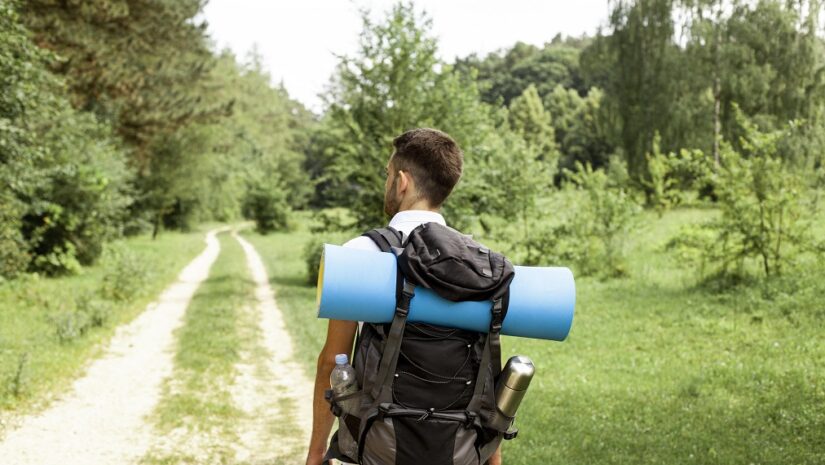
Hiking has moved from weekend hobby to a core practice for many people seeking calm and clarity. The draw is simple: you walk, you breathe, you notice what is in front of you. Unlike seated meditation, where stillness does the work, hiking pairs attention with movement. The trail acts as a metronome. Steps set the pace; breath follows; the mind starts to unspool. What was once a private pastime has become a shared pattern, a way to focus without screens and to reset after a week shaped by deadlines.
Part of the appeal is the low barrier to entry. You need a route, water, and time. The rest is optional. People learn by doing: they pick an easy trail, adjust pace, and build distance over weeks. The practice spreads through stories rather than doctrine. A friend says a local loop helped them think more clearly, and another tries it. Guidance arrives informally—tips about footwear, weather, or navigation—and sometimes from unexpected places; an example of how attention can be shaped by quick feedback loops is shown on this website, which invites reflection on how small prompts can direct choices and habits.
Movement as a Focus Tool
Sitting still with your thoughts is hard. Walking offers a built-in anchor: ground contact, stride length, and breath rhythm. These steady signals compete with intrusive thoughts without forcing them away. Many find that problems loosen after thirty minutes on a steady grade. The effect is not mystical. It is a change in inputs. You trade alerts and crowded rooms for trees, rocks, and sky. The brain adapts to the slower feed and settles into a simpler loop: step, look, breathe, repeat.
Attention Without a Screen
Modern life trains attention to scan. Trails train attention to track. You watch the ground for roots, then lift your eyes to plan the next two or three moves. This rolling focus keeps you present without strain. The phone can stay in a pocket, powered off. When a view opens, you notice it because you have not been flooded by novel stimuli for the last hour. That pause—looking over a valley, a lake, or a ridgeline—feels different than a quick scroll. It is a full stop that you earn by climbing to it.
The Body’s Quiet Feedback
Hiking provides biofeedback without gadgets. If the pace is too fast, breath and legs inform you within minutes. If you under-fuel, energy dips early. If you over-pack, your shoulders speak up. Over time, people learn to match distance to daylight, food to route, and water to heat. This calibration builds a sense of control that carries into daily tasks. You learn that planning helps, that rest matters, and that small errors compound on long routes. The body teaches in a direct, nonverbal way.
Solitude and Company
Meditation is often solitary. Hiking can be, but it also scales to groups. Some prefer quiet walks where thoughts rise and fall without talk. Others value steady conversation across miles—the kind that arrives when devices are away and time is not scarce. Families set weekly loops. Co-workers schedule walking one-on-ones. For people who struggle with face-to-face intensity, walking side by side eases pressure. The shared task of moving forward gives talk a natural cadence and breaks silence without awkwardness.
Access and Equity
Trails are not equally distributed. Some neighborhoods sit next to parks and greenways; others do not. Transit to trailheads can be patchy, and entry fees or gear costs add friction. If hiking is to function as a public health tool—a moving form of meditation—cities need safe paths, connected green corridors, and simple wayfinding. Small investments matter: a footbridge that links two trail segments, a water fountain at a junction, a sign that shows distance and grade. These changes convert “maybe someday” into “I can go today.”
Risk and Judgment
A key difference from seated practice is risk. Weather shifts. Footing fails. Routes confuse. Responsible hiking includes basic judgment: checking a forecast, telling someone your plan, carrying extra layers, turning back when time is tight. The discipline mirrors the mental work of meditation—notice conditions, adjust, continue or stop—but with real consequences. This edge adds meaning. Completing a loop safely brings a quiet pride that is hard to get from a timer on a phone.
The Rhythm of Seasons
Seated meditation can feel the same each day; hiking changes with light and temperature. Spring shows waterlines and fresh growth. Summer extends daylight but raises heat. Fall reveals the shape of terrain as leaves drop. Winter shortens routes and sharpens sound. These cycles turn hiking into a calendar. People learn when a stream runs high, when a hillside blooms, when the sun clears a ridge. The practice becomes an education in place rather than an abstract routine.
Tools, But Not Too Many
Gadgets promise precision—pace, elevation, heart rate. They can help, especially for training or safety. But the core of hiking-as-meditation is subtraction. Most days, a map and basic kit are enough. The point is to reduce intermediaries between you and terrain. Some people set “analog days” with no data tracking. They pick a familiar loop, leave the watch at home, and check in with their own signals. The absence of metrics can feel like a release.
Why the Practice Spreads
Hiking asks little of institutions. There is no doctrine to learn, no hierarchy to join. People experiment, share notes, and form loose communities. The practice rewards regularity more than intensity. Ten short walks can be better than one long push. That pattern matches modern schedules, where time is often sliced into uneven blocks. It also pairs well with other routines: strength work on rest days, simple mobility drills at home, reading maps in the evening. The system is light and adaptable.
What Cities and Parks Can Do
If leaders want to support this outdoor revolution, they can start with maintenance: fix drainage, clear fallen branches, repaint blazes, and widen narrow choke points that cause conflicts. Add loop options of different lengths from the same trailhead so families can scale up or down without moving the car. Place benches at natural turnarounds. Publish trail “time bands” instead of only distances—how far a 30-, 60-, or 90-minute walk usually reaches from each entrance. These small upgrades respect the way people actually use trails for mental health and daily reset.
A Practice With an End Point—and No End
Every hike ends: you return to a door, a car, a bus stop. Yet the sense of clarity often lingers. The day’s noise seems more manageable. Problems feel less tangled. This is not a cure-all. It is a routine that nudges attention toward what matters and away from what does not. Like meditation, hiking gains power through consistency. Miss a week and you feel it. Keep at it, and the miles stack into a kind of quiet competence.
Getting Started, Staying With It
A simple start is best. Choose a short loop with clear markings. Go slow enough to hold a conversation. Notice three things each time: a sound, a texture, and a line of light. Log your outing in a sentence. Add distance only when walks feel too short. Invite a friend every other week. Keep a small kit ready by the door so preparation never becomes a barrier. Over months, the practice will write itself into your week.
Closing Thought
Hiking became the new meditation not by design but by fit. It meets crowded minds with a steady task, replaces noise with pattern, and delivers a kind of earned stillness at the end of a path. The ritual scales to many ages and budgets, and it gives back more than it takes. In a world of constant prompts, the trail offers a counter-program: fewer choices, clearer signals, and a way to practice attention while moving forward.